TeleCANesis Returns to Embedded World 2026 with Expanded Plug-in Ecosystem
March 2, 2026
Growing adoption, upcoming v1.1 enhancements and live cross-platform demo highlight momentum
TeleCANesis will exhibit at Embedded World 2026 in Nuremberg, marking its second participation at the event and showcasing continued progress of its lean connectivity middleware for embedded systems. The company will highlight an expanding plug-in ecosystem, ongoing work on the upcoming TeleCANesis 1.1 release, and growing commercial adoption.
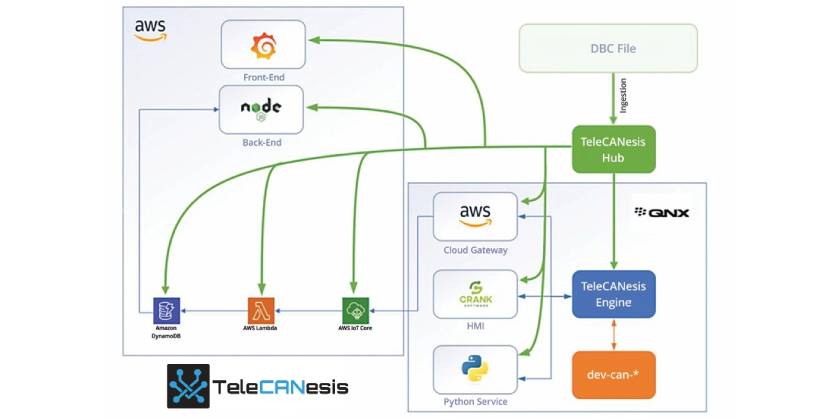
The company helps developers integrate connectivity across complex embedded environments more quickly by automating code generation, simplifying protocol bridging, and supporting a broad range of hardware buses such as CAN, I2C, RS485 and Ethernet, industrial protocols including MQTT, Modbus and J1939, and HMI frameworks such as Qt, Unity, GL Studio and Slint. The approach reduces development effort significantly and accelerates time to market for connected devices and distributed systems.
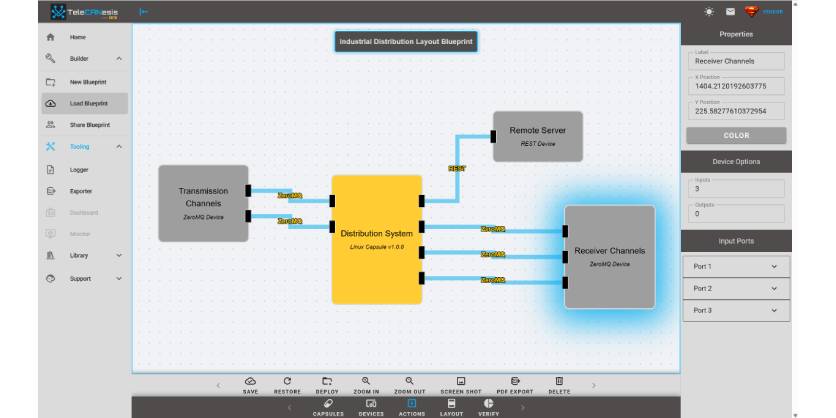
A key focus this year is growing plug-in support, driven largely by user feedback. Recent additions include a CANOpen codec and a serial connector plug-in, alongside support for Raspberry Pi 4 and Raspberry Pi 5 hardware targets and the Yocto Scarthgap toolchain. The forthcoming TeleCANesis 1.1 update will include an updated ingestion workflow that can update messages previously created to new instances. It will also provide more information about how to connect different aspects of a blueprint, alongside broader usability refinements and additional integrations.
Visitors to the booth will also be able to see a technical preview demonstration created in collaboration with ecosystem partners. The demo will show TeleCANesis exchanging live data between HMI environments including DiSTI GL Studio and Slint, running in real time on the booth to illustrate cross-platform connectivity in a distributed embedded setup.
Jonathan Hacker, CTO of TeleCANesis, commented: “We’re seeing strong interest from teams dealing with increasingly complex connected devices. Much of our recent development has come directly from user feedback. We’ve made integrations easier and added plug-ins people need. We’re also progressing discussions with potential reseller partners as we build our commercial channel. Embedded World is a great place to showcase that progress and talk to developers facing the same challenges we originally set out to solve.”
Embedded World 2026 takes place 10-12 March at the Nürnberg Messe exhibition center in Nuremberg, Germany. Visitors can meet TeleCANesis at booth 4-500a for demonstrations and technical discussions.
About TeleCANesis:
Canada-based TeleCANesis develops software tools that simplify and accelerate the creation of smart, connected industrial products. Founded by application developers for application developers, its eponymous flagship environment, TeleCANesis, enables engineering teams to interconnect system nodes quickly and reliably using a wide range of standardized buses, protocols, and HMI frameworks. By automating code generation and streamlining integration, TeleCANesis helps reduce software bring-up costs by up to 70% while cutting time to market dramatically. TeleCANesis empowers design engineers to focus on innovation rather than repetitive integration tasks.
More Information
Visit https://telecanesis.com/ to discover more.
Related Story
TeleCANesis Boosts Software Development Efficiency with Embedded Connectivity Toolkit Built on QNX
TeleCANesis is announcing an embedded software environment for teams creating smart industrial, medical and mobility products, which helps quickly interconnect system nodes using standardized communication interfaces and protocols. The new toolkit is built on the QNX ® Operating System (OS), a high-performance, real-time operating system designed for mission-critical embedded systems like those within robotics, medical devices, industrial controls and more. Targeting use cases in automation and control, asset tracking, remote condition monitoring, e-mobility, smart agriculture and healthcare, reducing software development costs by 70% or more and accelerates time to market significantly.