Using the ULS-100 Universal Level Sensor to Replace Your Existing Sensors
July 19, 2022
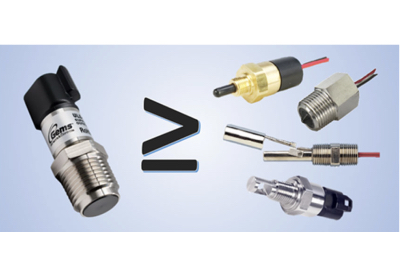
Gems Universal Level Sensor not only encapsulates the best of what existing sensor types offer in a single sensor technology, but also eliminates or reduces the inherent limitations experienced when using the very same sensors.
The sensor types covered in this article include capacitive (CAP-300), electro-optic (ELS-1150), ultrasonic (XLS-1), and float (LS-7). Each have their benefits, and sometimes a particular sensing technology is chosen to fit specific application requirements. Quite often though, the application is not overly critical where a functional replacement like the ULS-100 is an acceptable, or even a preferred solution. Some of the limitations overcome by the ULS-100 versus the alternate models are shown below.
Orientation
Limited mounting orientation options: XLS-1, ELS-1150, LS-7
The ULS-100 can be mounted in nearly any position. This opens up mounting options and unique applications not available with other sensor technologies.
Size
Longer overall and/or probe length: XLS-1, LS-7, CAP-300
The ULS-100 is about 2.63” (66.8mm) overall length with only 0.13” (3.3mm) flush sensing element. It fits the tightest spaces with almost no intrusion by the sensing element in your container or tank.
Media types
Media detection determined by type or limited by properties: CAP-300, LS-7, XLS-1, ELS-1150
The ULS-100 detects water or oil based media. It works well in high-viscous liquids and ignores low density foam or bubbles. It also does not rely on specific gravity like float type switches do.
Time delays
Time delays not available or requires special with added cost: CAP-300, LS-7, XLS-1, ELS-1150
The ULS-100 is able to be configured with your choice of optional time delay on increasing level and decreasing level at no added cost. Available at 3, 5, or 10 seconds rising or falling (or both).
These are just a few of the features and benefits that the Universal Level Sensor brings over the other types listed above, but what it also shares as the best qualities with the existing sensors are:
- •Accurate & repeatable
- •Priced competitively without affecting performance
- •Wide range of applications covering numerous markets
- •Gems expertise and product support
Check the available configuration options and price on the ULS-100 using their online configurator. The Universal Level Sensor acts as a direct drop-in replacement for many of the models above! If a drop-in doesn’t quite match up, always consider the ULS-100 for your sensing needs when modifications can be made to accommodate, and definitely when starting a new project!