Understanding the Benefits of Industrial Automation

March 10, 2022
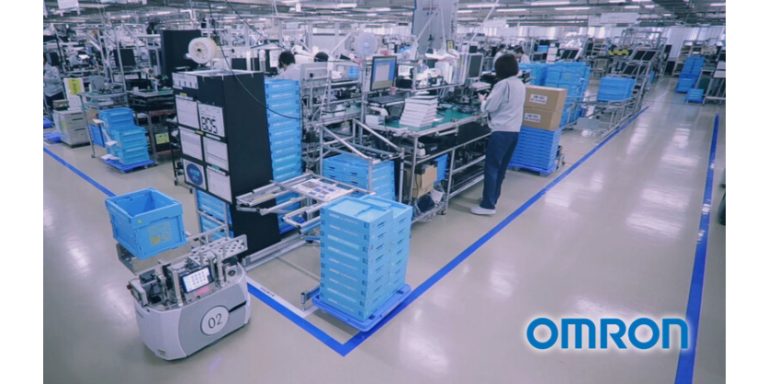
Industrial Automation is the automation of general-purpose machinery used in standard or task-specific applications. It can be applied to almost all industries, and primarily deals with the manufacturing, quality control, and material handling processes for those industries. In this article, Electromate explores the A to Z benefits that industrial automation brings to businesses across the world.
It’s usually pretty easy to integrate
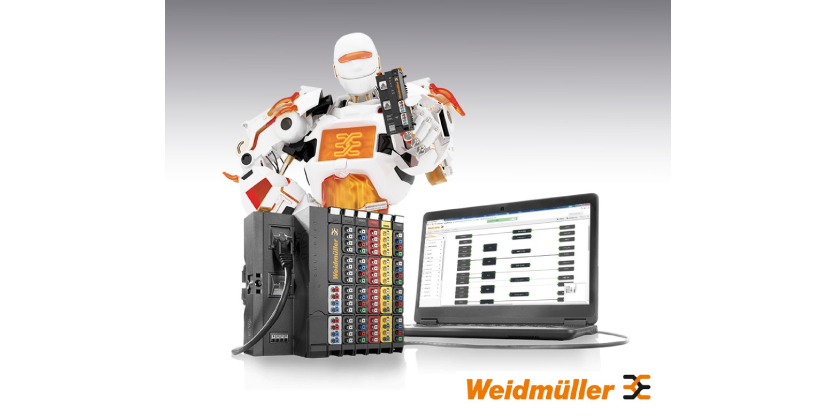
A lot of newer solutions are engineered to be plug and play. From custom Welding Solutions to Integrated Motor & Drive Products, the goal is easy integration and lessening the learning curve. This gets you up and running soon after machine commissioning.
It’s more versatile than you think
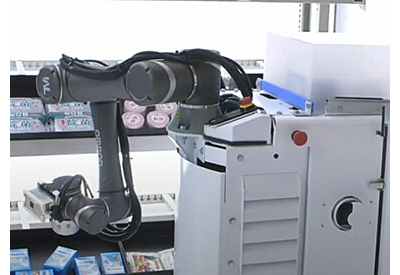
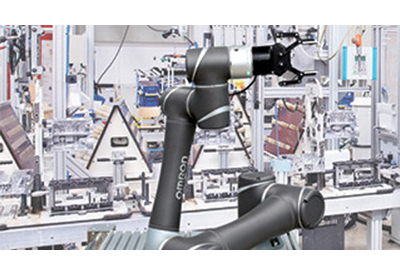
Just because something is plug-and-play doesn’t mean it lacks flexibility. The UR Cobot from Universal Robots is a perfect example of an easily retooled and repositioned industrial automation system that can be utilized for different functions and applications, without having to retool a production line.
You’re going to benefit from higher production and productivity rates
When we’re not producing, we are not productive. A robot has the ability to work continuously and unattended at all times. There’s not much that competes with that level of productivity. Also, thanks to automation, new products can be introduced more quickly into production.
You’re also going to maximize your labor
Over the next three decades, statistics show that more than 76 million baby boomers will retire and only 46 million new workers will be available to replace them. During this time, your demand for labor will continue, making automation a real and viable solution.
You’re going to waste less materials and promote a smaller environmental footprint
Are you tracking how much material is being wasted during your production? Do you have a plan for what to do with that waste or how to maximize its ROI? Having an automation system in place to monitor all your material use will provide insight for opportunities to reduce waste. In doing so, you are also reducing the environmental footprint. Nothing wrong with saving money and the earth at the same time.
The quality of your product is going to improve
We all like certain things handmade, but you’re never guaranteed the consistency you are with machined precision. Product quality has a lot to do with accuracy and repeatability. A well-tuned automation system guarantees product consistency on a daily, monthly, and yearly basis while monitoring for faults and/or failures.
Operating costs will go down
As mentioned earlier, Robots/Cobots perform the work of multiple people depending on the task. So, in addition to saving to labor, there’s also a chance for significant HR savings. Robots streamline processes and increase part accuracy, which means minimal material waste for your operation.
Safety, safety, safety
Are all your employees as safe as they could be? Industrial automation systems are vital in ensuring employees are kept out of harm’s way. The more you automate, the more you’re keeping people at a safe distance and allowing the machines to work for you.
Electromate supplies Robots and the components that integrate together to make industrial automation systems. Electromate’s knowledge of robotics and mechatronics combined with your project specifications, enables them to provide you with a range of industrial automation solutions designed to help you increase quality and throughput. Contact Electromate today to discuss your requirement by clicking here.