Mass production was yesterday

August 6, 2019

EMO: SuperTrak brings batch size one to the metal industry

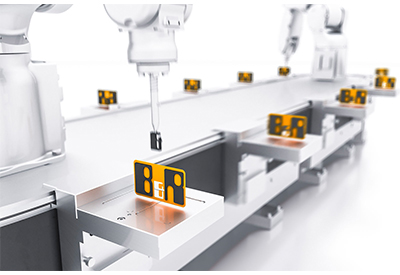
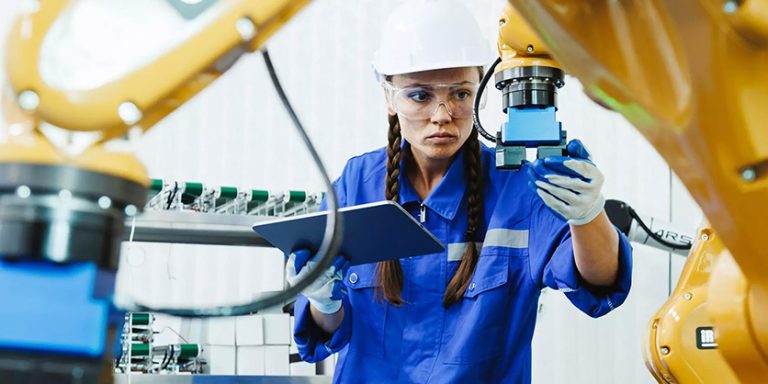
The metal industry is not immune to the global trend away from bulk annual orders toward small-batch customer orders with short lead times. To handle this type of individualized production in batch sizes as small as one, manufacturing systems must become much more flexible. B&R’s booth at EMO (Hall 9, Booth F50) will showcase track-based transport technology, whose independently controlled shuttles and rapid changeover times enable flexible, customer-centered manufacturing.

Track-based flexibility

Large annual bulk orders are giving way to smaller orders with shorter lead times and frequently changing requirements. Meeting these demands requires manufacturing systems that can adapt to these changes quickly and easily. AT EMO, B&R will showcase its SuperTrak transport system, which can be scaled in one-meter increments. The independently controlled shuttles give machine designers all the flexibility they need. A demo system featuring ABB robots highlights how seamlessly other subsystems can interact with the track system and perform additional production tasks.

Efficiency and profitability

Mass customization centers around an ability to produce small batches cost-effectively. Users of track technology benefit from high transport speeds and short changeover times that make manufacturing profitable down to batch size one.
Source

Related Articles


Editor’s Pick: Featured Article

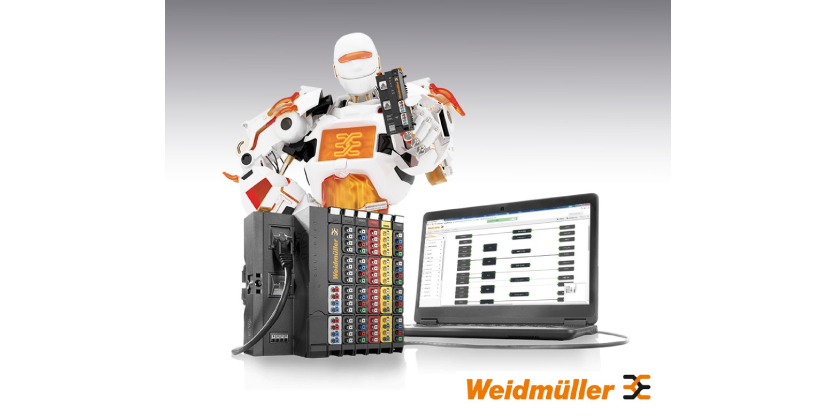
Weidmüller’s u-control 2000: The Automation Controller

Weidmüller’s u-control 2000: The Automation Controller

Weidmüller’s scalable engineering software, u-control 2000, adapts individually to your requirements. And, the u-control is powerful, compact and fully compatible with Weidmüller’s I/O system u-remote. This article looks at what makes u-control the heart of your automation.

Programmable logic controllers (PLCs) are one of the main components of any automated system. A typical control system has inputs, outputs, controllers (i.e., PLCs), and some type of human interaction with the system, a human machine interface (HMI), for example.

Read More


Latest Articles

  • Applications of Physical AI in Canadian Sectors

    June 23, 2026 Physical AI — the convergence of artificial intelligence with robotics and autonomous motion systems — is reshaping how Canadian industries operate. Across sectors from healthcare to mining, AI-enabled machines are performing tasks that were once entirely dependent on human intervention. But deploying Physical AI effectively requires more than sophisticated algorithms: it demands… Read More…

  • Case Study: Optimizing Harmonic Mitigation in Wastewater Treatment

    June 22, 2026 Segment and Application In a municipality, wastewater treatment plants typically stand out as the main consumers of electricity. The operational processes exhibit significant load variations throughout a 24-hour cycle, necessitating the use of AC drives to regulate pumps, blowers, and other motorized equipment in response to fluctuating demand. In one wastewater treatment… Read More…